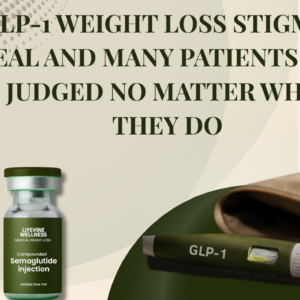
For years, people living with obesity have been told to “just eat less and move more.”. Now that various GLP-1 medications are providing many individuals with a tool to lose weight (through appetite suppression), new forms of judgement are emerging for individuals who take GLP-1 medications.
Some people view taking a GLP-1 medication to help with weight loss as simply “cheating” or being “the easy way out”. If a person stops taking the medication and regains weight, they are often faced with additional criticism.
A recent study published in the International Journal of Obesity confirmed an experience that many patients knew prior to the study: people on GLP-1 medications experience greater stigma than individuals who have lost weight on their own through diet and exercise.
What’s surprising is that the stigma doesn’t seem to disappear no matter the outcome. According to researchers, many individuals face criticism whether they lose weight with medication, regain weight later, or remain overweight altogether.
Researchers described the experience of judgement described in the study as a ‘no-win’ situation for the participants.
The Growing Conversation Around GLP-1 Medications
Medications like: Semaglutide, Tirzepatide are changing the way obesity is treated.
Many patients who take these medications say they’ve had their appetite reduced, normalized their eating habits and have experienced significant weight loss after dealing with obesity for years.
But public opinion hasn’t fully caught up with the science.
Despite considerable evidence that obesity is a chronic metabolic disease and is not merely the result of a lack of will power, many more people still view the use of medications for weight loss differently than they do the use of traditional lifestyle changes.
The new research shows that there are emotional and social implications resulting from this discrepancy.
What the Study Looked At
Researchers conducted two randomized studies involving more than 1,300 adults in the United States.
Participants were shown descriptions of fictional individuals who had lived with obesity for years. Some had:
- lost weight using GLP-1 medications
- lost weight through diet and exercise
- regained weight after treatment
- or remained at a higher weight without losing weight
Participants were then asked to rate these individuals on qualities like:
- discipline
- healthiness
- likability
- social desirability
- willingness to interact with them socially
The results revealed a pattern researchers didn’t entirely expect.
People Viewed GLP-1 Users More Negatively
One extremely significant finding of the research is that those who lost weight using the drug GLP-1 drugs were negatively classified as opposed to those who lost weight by exercising and dieting.
Many of the research participants viewed those who used medication to lose weight:
- lacking self-discipline
- lacking admiration
- less healthy
In some cases, the GLP-1 user was viewed even less favorably than someone who remained overweight without attempting weight loss.
This finding has implications for the research on the stigma of weight, as it challenges the notion that only individuals with larger bodies will be subjected to weight-based stigma. The results of the current research indicate weight stigma is still experienced by those who have lost weight, especially with medications used to assist in the process of weight loss.
The Stigma Doesn’t End if Weight Returns
The second phase studied the impact of individuals gaining their weight back after ceasing the treatment.
The researchers concluded that participants who gained their weight back after ceasing treatment with GLP-1 medications were still viewed in a negative light.
Moreover, there was an apparent stigma towards individuals who gained back their weight after completing a successful diet and exercise regimen to achieve weight loss.
Therefore, society tends to acknowledge success in weight loss, but tends to view a return to one’s previous weight with judgment, regardless of whether one has gained back their weight through either dieting, exercise, and/or GLP-1 medications.
This is particularly important as there are many individuals who stop their GLP-1 medication therapy for a variety of reasons including:
- cost
- insurance changes
- medication shortages
- side effects
And medically speaking, weight regain after stopping treatment is not unusual.
Why These Attitudes Matter
Experiencing weight stigma can lead not only to emotional pain but poor healthcare as well.
Research has highlighted that those experiencing weight bias often:
- avoid medical care
- delay treatment
- experience anxiety or depression
- struggle with long-term weight management
For patients who are already living with obesity, diabetes, PCOS, or other metabolic conditions, the social stigma placed on them adds even more stress to an already stressful situation.
This is one reason that many obesity treatment specialists believe that weight management should be framed in more of a medical context rather than a moral context when discussing weight management with patients.
The Emotional Side of Weight Loss That People Don’t Talk About
The quiet reality of people who have been prescribed a GLP-1 medication for their weight management is the number of them who finally obtain relief from their many years of battling with the sensations of constant hunger and “food noise”.
They feel like they can manage their weight for the first time, rather than exhaust themselves trying to do so.
Some of those patients also experience a lot of feelings of guilt, shame, or fear of other people judging them.
They may not even want to tell others that they are on medication because they think that people will accuse them of not working hard to reach their goals.
There is not enough conversation about the emotional burden of this situation.
The Conversation Around GLP-1s Is Still Evolving
As GLP-1 medications, like Semaglutide and Tirzepatide, become more widely used, public perceptions of those types of medications will continue to change.
The study authors emphasized the need for:
- better public education
- reduced obesity stigma
- improved understanding of medical weight treatment
Ultimately, people who seek out medical assistance to manage their obesity require the same care and compassion as any person who seeks care for another type of chronic illness.
The Bottom Line
The findings from the recent research reinforces what many patients with obesity already know; that the stigma associated with being overweight does not simply go away once a person loses weight and that people treated by GLP-1 meds may actually experience an increase in stigma towards them.
People were judged for:
- using medication
- regaining weight
- or remaining overweight
Patients with obesity frequently find themselves stuck in a situation in which they receive stigma regardless of what action they take.
As GLP-1 medications continue changing obesity treatment, the conversation around weight also needs to change. Obesity is complex, treatment is personal, and no one should feel ashamed for seeking medical help to improve their health.
References
Journal reference:
- Standen, E. C., Phelan, S. M., & Tomiyama, A. J. (2026). An experimental investigation of the stigmatization of weight loss and regain from GLP-1 receptor agonist use and cessation. International Journal of Obesity. DOI: 10.1038/s41366-026-02061-y. https://www.nature.com/articles/s41366-026-02061-y
- International Journal of Obesity
https://www.nature.com/articles/s41366-026-02061-y - News-Medical
https://www.news-medical.net/ - Centers for Disease Control and Prevention
https://www.cdc.gov/obesity/